First time onsite: what an internship actually feels like
February to April 2026 I was onsite as a Business Process Automation intern. I expected to be slammed. The actual experience was different - calmer, friendlier, and more about people than I'd been told.
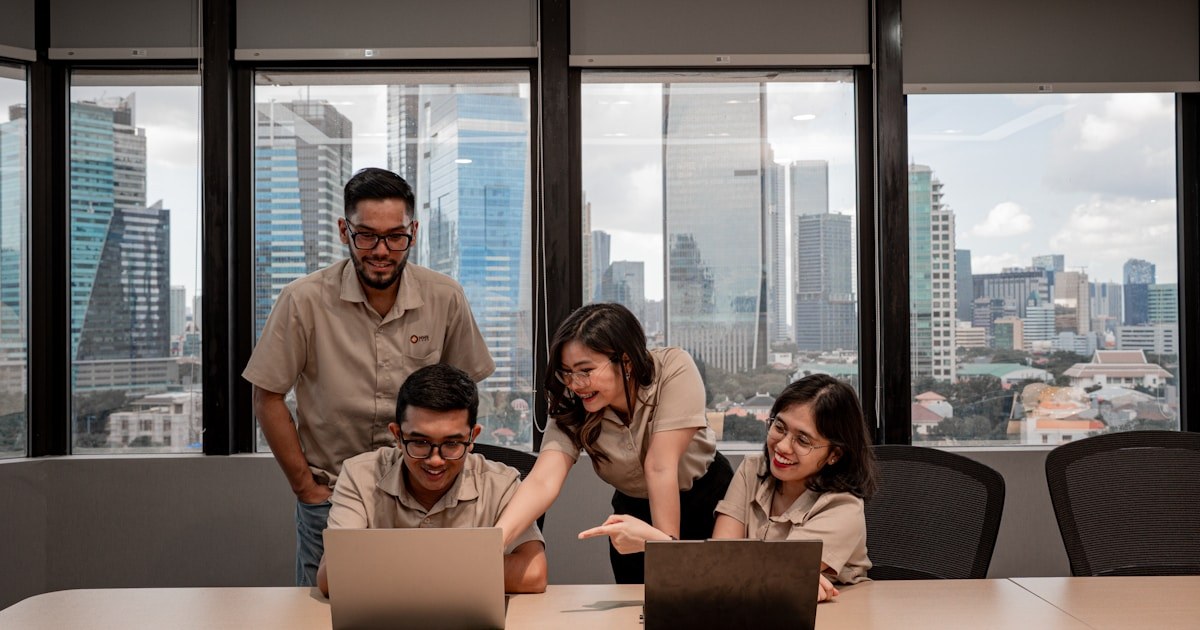
From February through April 2026 I worked onsite at Innodata in Mandaue City as a Business Process Automation intern. It was my first real exposure to a professional work environment, and I want to write down what it was actually like - because the version I had in my head before I started was different from the version that turned out to be real.
What I expected
I came in expecting it to be heavy. Long hours. Constant deadline pressure. Senior people too busy to answer questions. That's the picture you get from a lot of internship advice online - the implicit assumption that a corporate workplace is going to overwork you and that the ability to absorb that overload is part of what you're being trained for.
I had also half-expected to feel out of place. I'd built things on my own for a few years, but solo work doesn't translate cleanly into office work. The skill of "merge into an existing team and contribute usefully" is its own thing, and I wasn't sure how quickly I'd pick it up.
What it actually was
The biggest surprise was how calm everything felt. People were busy, but not panicked. Senior staff had real time for questions. The pace had a rhythm to it - intense for a few hours, then a deliberate breather, then back to focus. Nobody tried to look maximally busy as a status display. It was just work, done at a sustainable pace.
The expectations placed on me as an intern were also more measured than I'd braced for. I wasn't being thrown into critical-path production tasks on day one. The team understood I was learning, and the work I was given was scoped accordingly. I built workflows, validated outputs, automated extraction tasks, and shipped a document extraction system - real work, but with the runway to actually learn from it instead of being judged on output velocity.
The HR department I was assigned to had a culture that was both professional and warm. Lunch breaks were communal. Conversations weren't only about deliverables. People asked how my school work was going. Small things, but they added up to a sense that the workplace was a place where humans worked, not a feature factory in disguise.
The technical side
The 501 hours produced real engineering output. InnoParse - the FastAPI-backed document extraction system using PaddleOCR and local LLMs - was the centerpiece. Building it under the constraints (CPU-only, 16GB RAM, no outbound API calls) shaped the architecture in ways I've already written about elsewhere. What I want to capture here is the human side of building it inside an organization for the first time.
I had to learn to match my work to existing processes instead of redesigning them. I had to write README files and documentation that someone unfamiliar with the project could follow. I had to handle the tradeoff between "this would be cleaner if I refactored it" and "the team needs the working version this week." Every one of those skills is something I'd heard about but only really learned by doing it on a deadline.
What I'd want next
If anything, the internship made me more open to the possibility that a long-term work environment can be a good place. Before this, I had a vague worry that any office job would be the kind of grind I'd want to escape from. The actual experience reset that assumption. A workplace where the pace is sustainable, the team is friendly, and the work is real is something I'd happily work in for years.
The other thing I came away wanting was more responsibility. The intern scope was right for an intern, but I caught glimpses of what the senior engineers were working on, and that work looked interesting. Architecture decisions, cross-team coordination, the kind of long-running projects where the strategic choices matter as much as the implementation. Those are the things I'd like to grow into.
A small note on Cebu
I want to mention this because it shaped the experience. Working onsite in Cebu, with a Cebu-based team, working on Cebu-specific problems, was something I genuinely enjoyed. There's a version of my career I could pursue where I move somewhere bigger and chase a larger compensation curve. There's another version where I stay here and build something good in a place that matters to me. After this internship, I'm more interested in the second version than I was before.
Three months isn't enough to know any organization deeply. But it was enough to update my model of what work can be like. The grind narrative isn't the only one. Calm, professional, sustainable workplaces exist. The challenge is finding one - and once found, contributing in a way that justifies a place there.